English
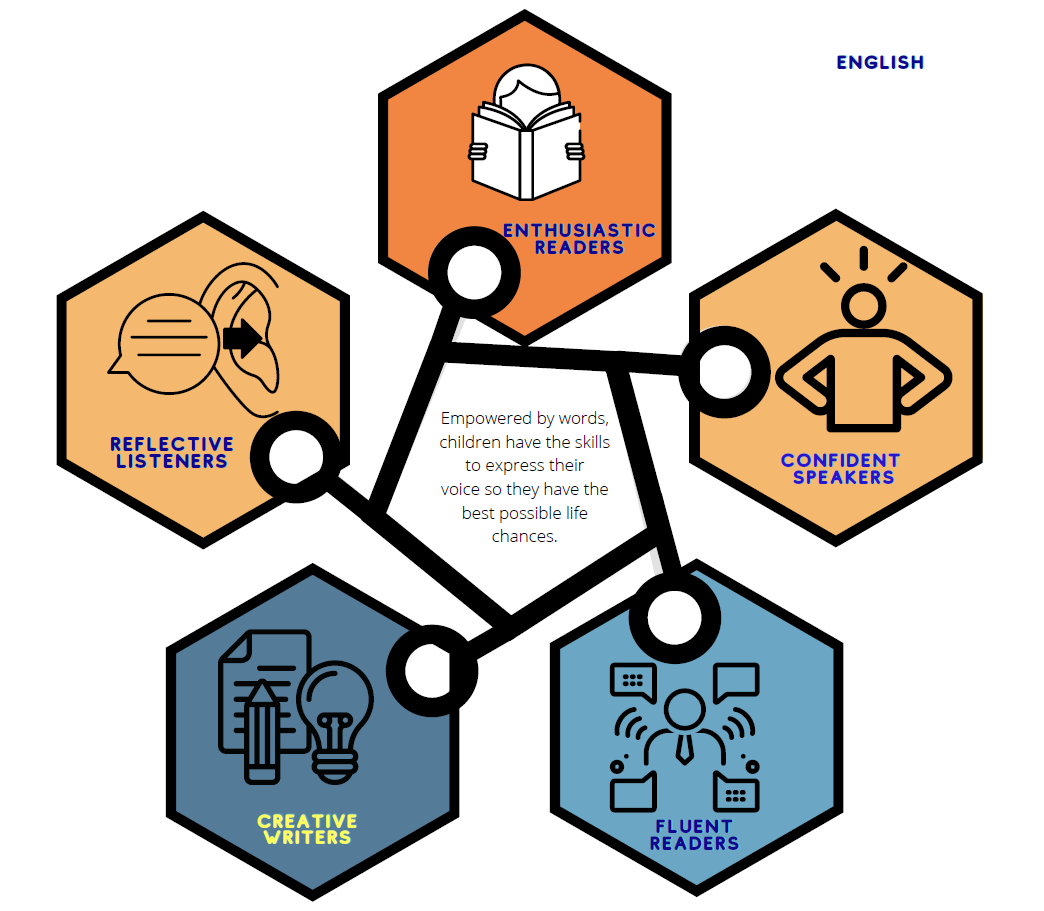
How we teach English
In order to be successful, English in primary schools must be consistent and it must be inspiring. Children are surrounded by language their whole lives, so we recognise the importance of giving them the tools to both make sense of the world and to develop their own voices in it.
We take great care to follow both the national curriculum and the interests of our children to create a well-rounded and vibrant English curriculum.
English involves reading, phonics, spelling, writing, handwriting and speaking and listening. All of these areas are fundamental to, not only allowing children to access the curriculum, but also to equip them to be life-long confident learners and communicators.
In order to be successful, English in primary schools must be consistent and it must be inspiring. Children are surrounded by language their whole lives, so we recognise the importance of giving them the tools to both make sense of the world and to develop their own voices in it.
We take great care to follow both the national curriculum and the interests of our children to create a well-rounded and vibrant English curriculum.
English at Ellen Wilkinson provides challenge and encouragement, with our staff demonstrating high expectations at all times. We recognise the importance of taking the time to explore exciting books in depth, and using drama and creative writing as ways of forming a deeper relationship with stories and texts.
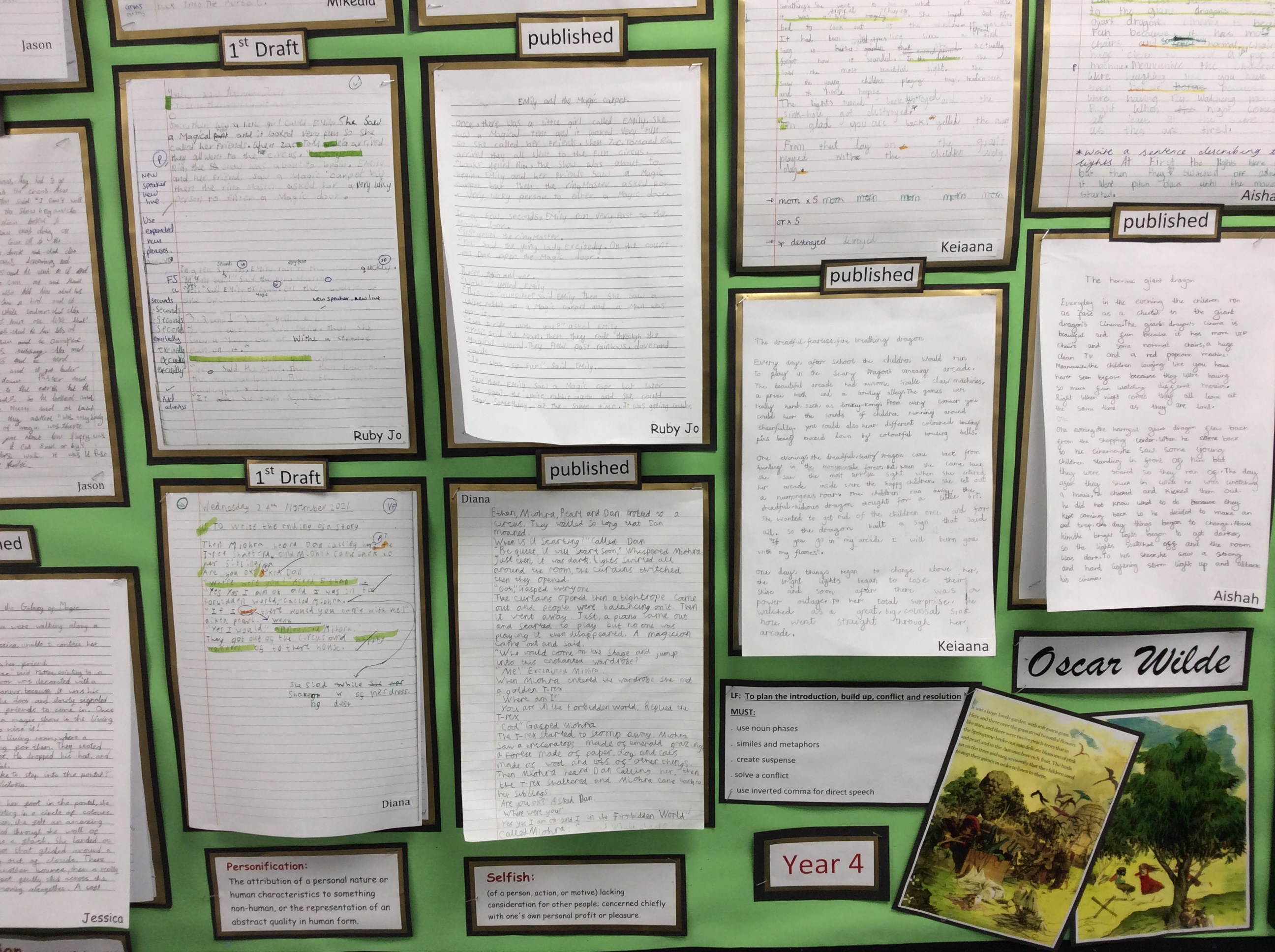
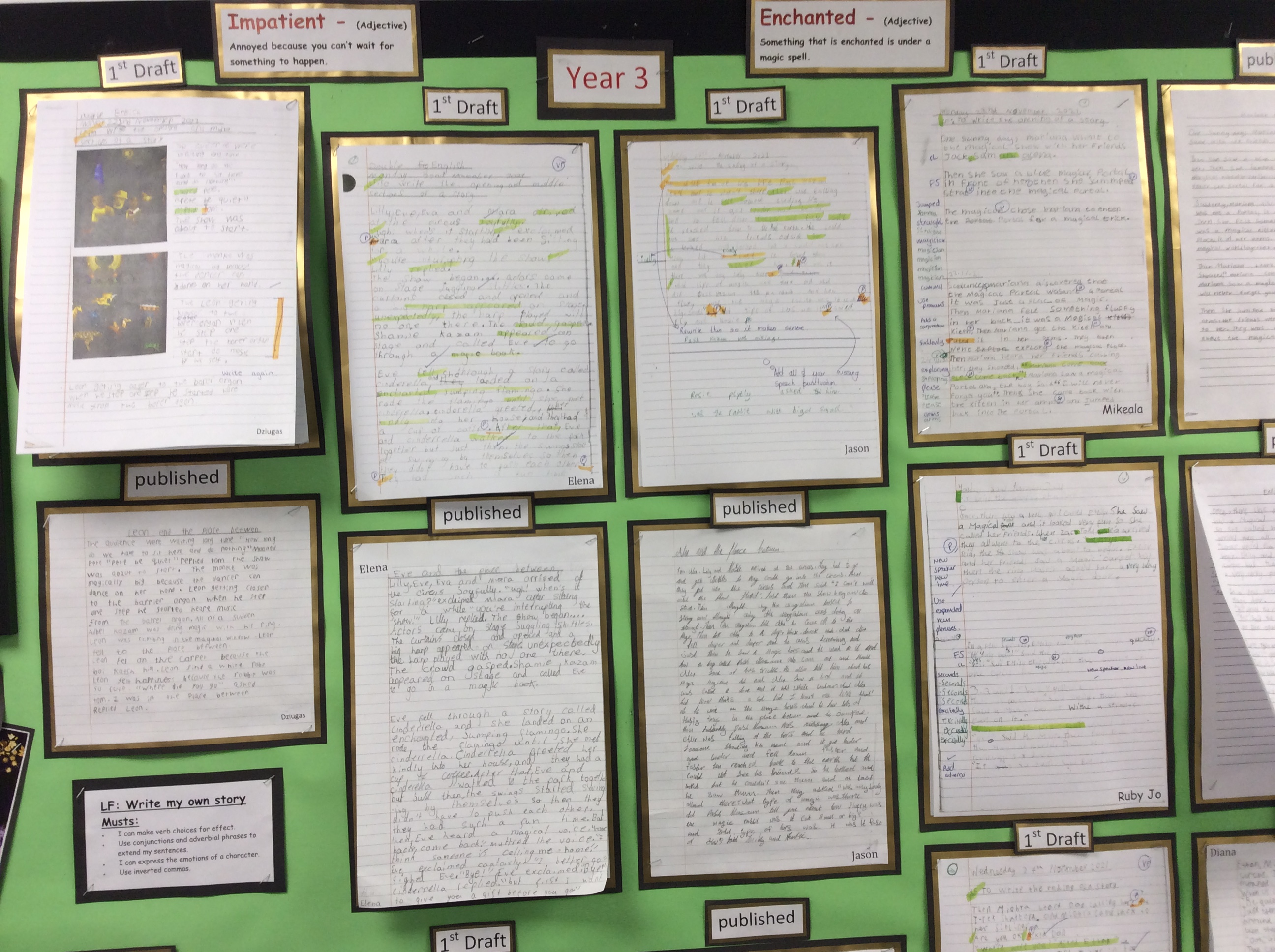
We ensure that our children are constantly exposed to creative and inspiring English lessons that are rich in vocabulary and imagination. Our children receive regular feedback on their progress and are taught, not only to be writers, but the craft and resilience of editing and revisiting their ideas.
We use an integrated and interactive English scheme (The Literacy Tree) to support our English curriculum and offer our children access to a virtual library (Bug club), giving them the opportunity to develop their love of reading both in and out of school.
How we ensure access for all
To ensure access for all, at Ellen Wilkinson Primary School, through Reading, Writing and expressive and receptive communication, we develop confidence by providing all learners with opportunities to be successful.
One of the key ways we do this, is through providing our children with vocabulary. Words are said out aloud and included in the written form. Teaching vocabulary enables students to be more successful at school, whether it’s for a classroom activity, a homework assignment or the subject in general.
Whenever possible, teaching is also done through a multi-modal way to benefit all learners. We use drama, quality texts, images or videos to engage and encourage creativity in writing. This also includes story-telling, rhymes and sing-along.
How we develop cultural capital
Cultural capital provides children with a varied and broad curriculum, which prepares them for the world. EWPS ensures that we provide our children with learning opportunities and experiences that enable them to succeed academically and engage in wider society.
Children are given access to a wide variety of quality texts to read, ranging from cultural stories, poems and newspapers. During Poetry Week, children from across the school engage with poems and poets from across the world with different cultures explored.
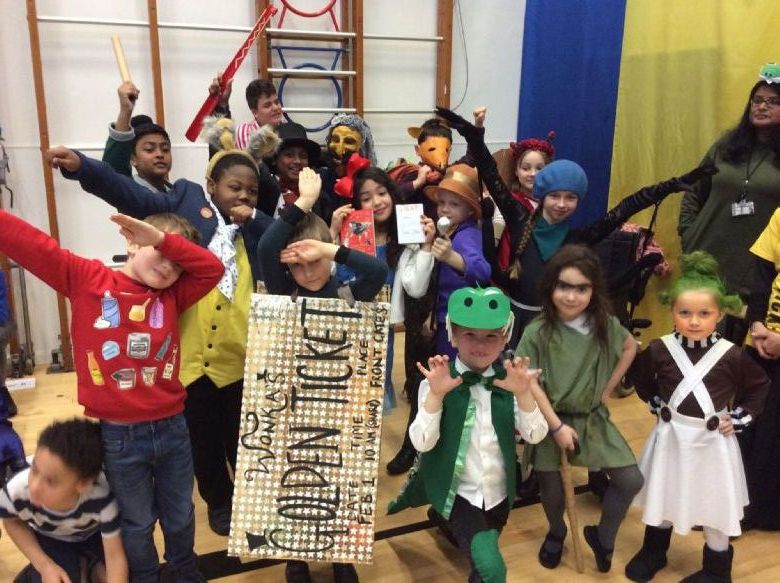
Our love of reading is celebrated regularly through shared reading texts, library visits to see poets and authors, consistent book talk and a week of creatively celebrating World Book Day.
To further encourage knowledge of the world, we provide cross curricular writing links with history and geography and children’s speaking and listening skills are developed through class and shared assemblies.
How we know your child is succeeding
Across all stages of Ellen Wilkinson, we see success in English through the imaginations and voices of our children as both researchers and storytellers. They should be inspired into developing a love for reading, and a passion for exploring a wealth of texts. We strive to equip them with a confidence and a desire to speak out and have their voices heard.
Above all else, we know that your child is succeeding when their resilience in the approach to English leads them to begin to expect to be successful. Assessment of pupils’ work is ongoing and is used to inform teachers’ future planning. Teachers get evidence from books and written outcomes and also through questioning and direct observation of children in class. Information on a child’s progress in English is reported to parents at Parent's Evening and in a written report at the end of each school year. In each lesson, the learning objectives and ‘musts’ (what children must do in order to be successful) are read and shared with the children, so expectations are clear, and they understand how to achieve the outcome.
How you can support your child
Reading: 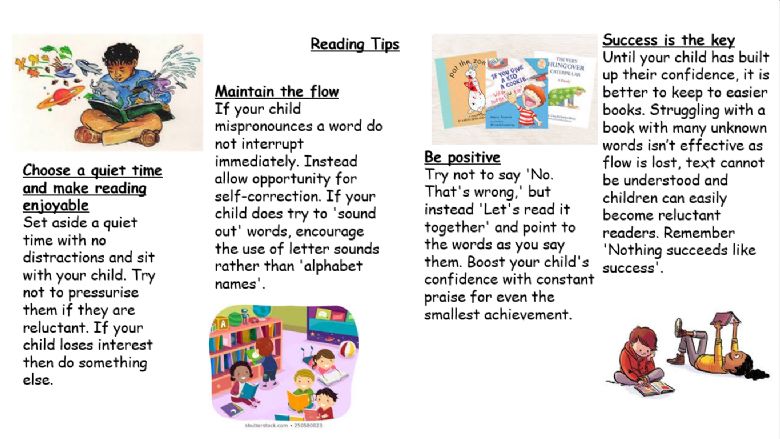
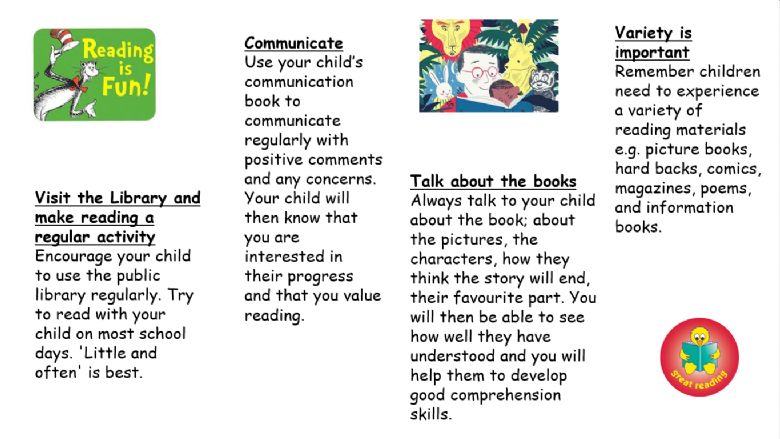 Writing:
Encourage your child to read a variety of genres; non-fiction, fantasy, science fiction, adventure etc. Seeing models of good writing will improve the reader’s own writing.
We write best what we know, so giving children life experiences will improve their writing. This could mean a walk in the park, a trip to the museum or a visit to a landmark.
Encourage children to ask questions about the pictures they see – thinking about characters, settings and situations they can turn into a story.
Phonics
At EWPS we use Anima Phonics as our phonics scheme. Please click on the tab on the top left to find out more.
If you would like to find out more information please contact us.
Subject Leaders
Laura Blaker
english@ellenwilkinson.newham.sch.uk